Plan your Budapest party bus route around three fixed details: where everyone meets, how long you have and where the ride finishes. Add sightseeing and photo stops after those are agreed. A route with a clear purpose leaves more time to enjoy the bus and less time gathering people outside different venues.
Start with one shared pickup and one final destination. Send your preferred stops to the operator for a route check, including any dinner booking, club arrival or airport connection with a fixed time.
Choose a city ride or a journey between venues
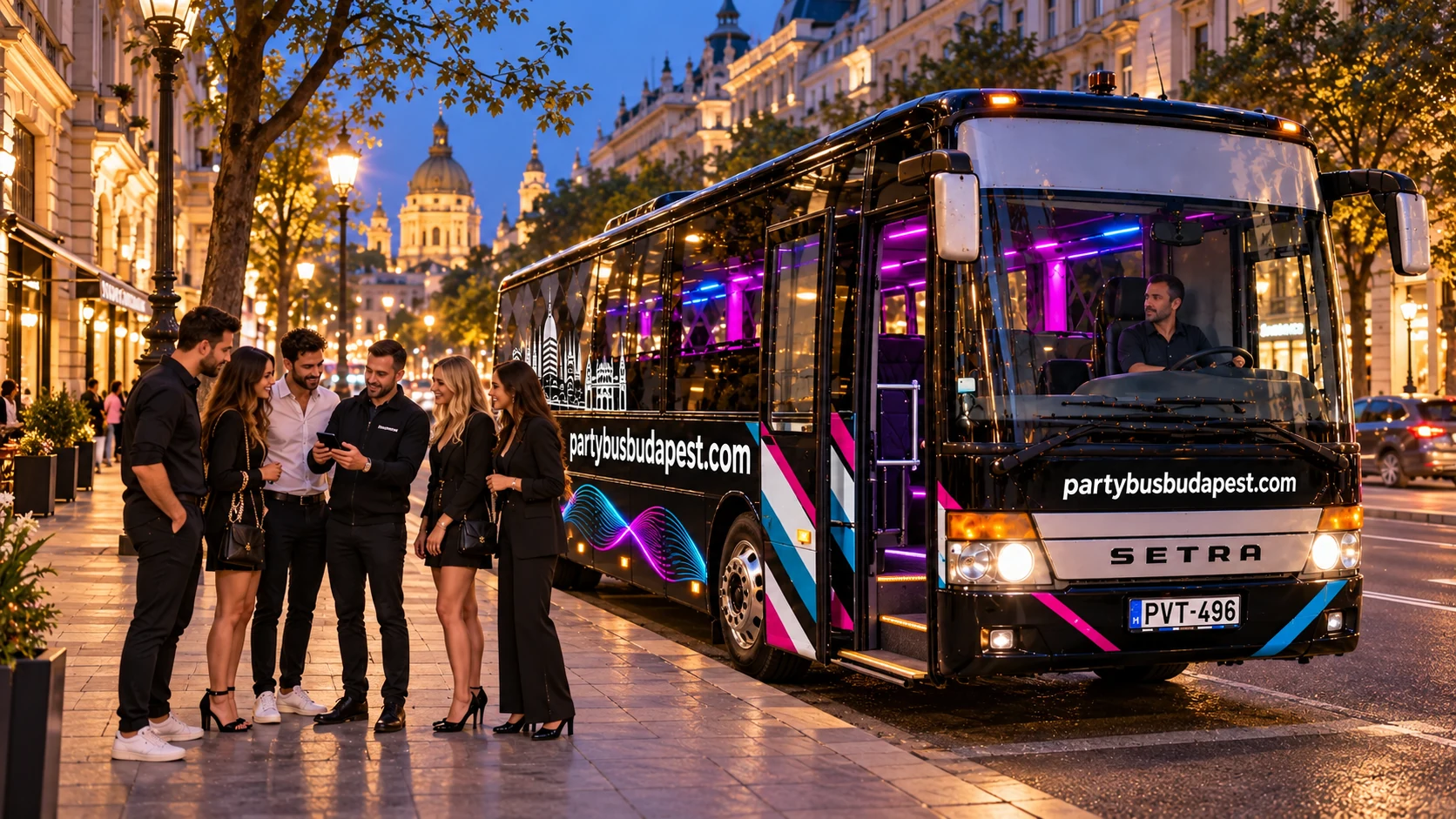
A city ride puts the celebration on board first. The route works around the hire duration, with a return to the starting area or a different agreed drop-off. A journey between venues starts with a destination, such as taking your group from dinner to a club. Decide which matters most before adding landmarks.
If you are comparing a Budapest bus tour with a private party bus, check the format. A scheduled sightseeing service follows its published route and stops. A private party ride is arranged for your group, with the route agreed for the booking. It does not automatically include a sightseeing guide, attraction entry or the freedom to stop anywhere.
For a celebration followed by nightlife, explore the clubbing party bus shuttle package. If the occasion is still undecided, the party bus package collection helps you choose the booking format before working through the route.
Agree one pickup point everyone understands
Send the accommodation or venue address, then wait for confirmation of the actual meeting point. A bus needs room to approach, stop and leave. An apartment entrance on a narrow street is not automatically a suitable pickup location, even when a car service has stopped there before.
For groups staying around the Jewish Quarter, share the full address rather than requesting a pickup “near the ruin bars”. Ask whether the group should walk to a nearby meeting point. Include any access needs before the location is agreed, so the walking distance and boarding arrangements are considered together.
Which pickup area should you request?
Use the place where most guests will already be together. If everyone is finishing dinner at the same restaurant, use its address as the starting brief rather than several hotel addresses. For accommodation spread across Budapest, choose a shared meeting area and have the operator confirm a specific location suitable for the selected bus.
Multiple pickups need an agreed order and time allowance. They are separate parts of the route, not free additions to a one-hour city ride. If collecting two groups is essential, include both addresses in the original enquiry.
Give the group a meeting time before departure
Ask guests to gather around 10–15 minutes before the agreed departure as an organiser’s buffer. This is suggested preparation time for your group, not a promise of free bus waiting time. Share a map pin, the written address and the organiser’s mobile number in one message.
Count everyone before boarding and nominate one contact for the driver. A group chat full of different instructions makes a simple pickup harder to manage.
How much fits into one or two hours?
Budget for the whole booking rather than treating every minute as driving time. Confirm when the hire clock starts and ends, and how waiting or additional time is charged. Boarding, getting off for photographs and gathering everyone again all affect the schedule.
A one-hour ride needs a simple plan
For a one-hour booking, prioritise the onboard celebration and the final destination. Request a straightforward city ride or a direct journey with an agreed scenic section. If a photo stop matters, ask the operator whether it fits before promising it to the group.
A useful way to test the plan is to subtract the time needed outside the bus. A 15-minute stop leaves 45 minutes of a 60-minute booking before allowing for boarding, traffic or the final drop-off. Several short stops quickly change the character of the ride.
Two hours allow a less compressed schedule
A two-hour booking gives more room to discuss a scenic section and a planned break, but the starting point and destination still determine what is realistic. Do not interpret the longer duration as a guarantee of twice as many landmarks.
List the stops in order of importance. Mark one as the priority and the others as optional, then ask for a workable plan. A route built around your preferred view is easier to assess than a request to see every major sight.
Separate scenic driving from photo stops
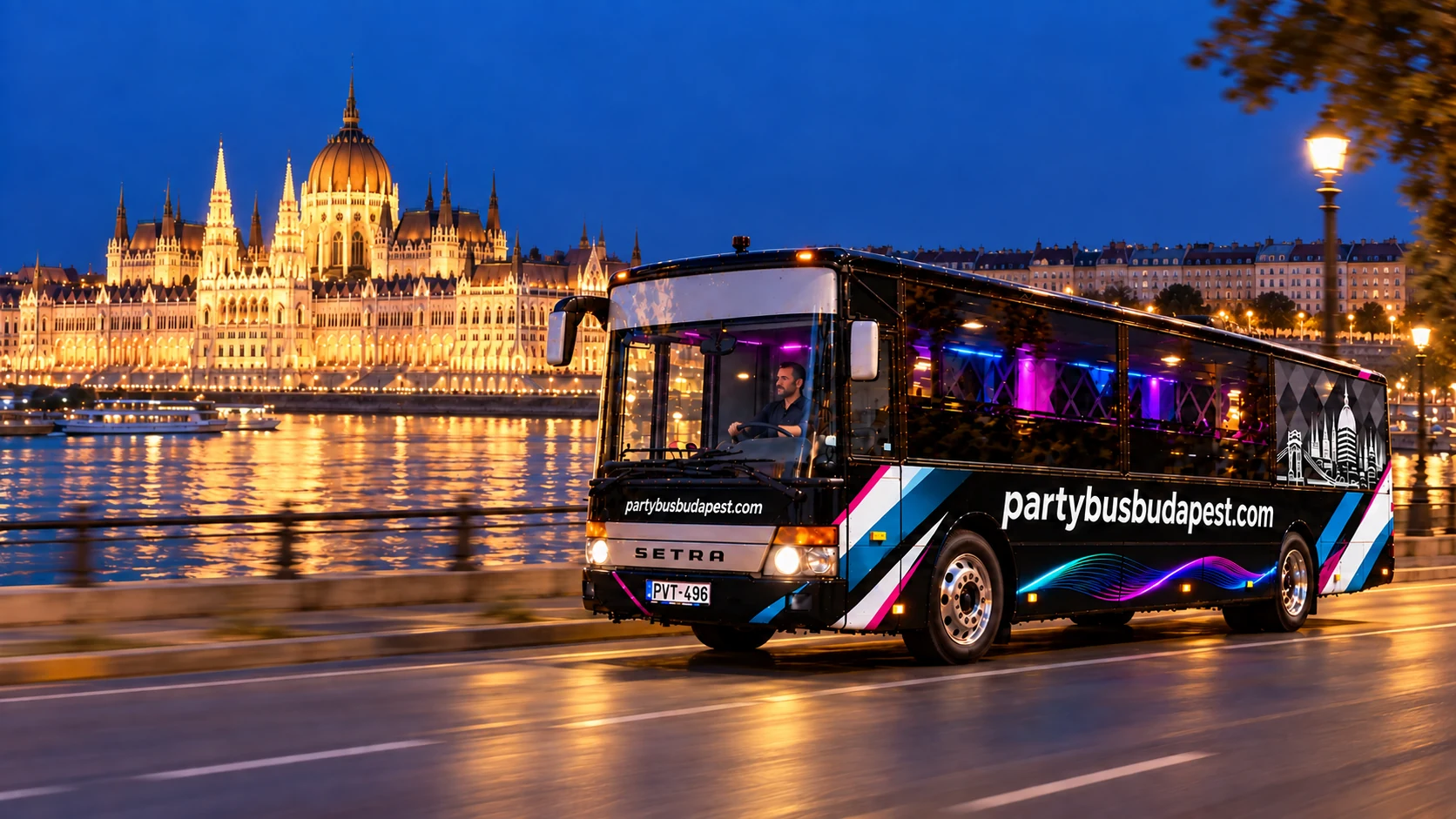
Passing a landmark and stopping beside it are different requests. If views of Parliament, the Danube or Heroes’ Square are part of your wish list, say whether seeing them from the bus is enough or whether you want time outside for photographs.
The operator needs to confirm access and a suitable stopping place for the chosen vehicle. A landmark pin is a point of interest, not evidence of bus parking. Roadworks, closures, traffic and the bus’s size all affect the final route, so keep an alternative in mind.
For a photo break, allow time to leave the bus, walk to the viewpoint, take photographs and return. A five-minute photo session does not necessarily mean a five-minute stop. Agree the return time before everyone disperses and ask one person to keep the group together.

If rain makes the planned break unattractive, tell the operator you would prefer more time on board, subject to the agreed route and duration. Discuss any essential toilet break in advance rather than relying on facilities being available at a scenic stop.
Work backwards from dinner or club arrival
A fixed reservation should shape the end of the journey. Share the venue address and required arrival time, then allow a margin between the planned bus drop-off and the booking. Getting off the vehicle is not the same as reaching your table or entering a club.
Check the venue’s entry arrangements separately. A bus reservation does not confirm club admission, a table or queue priority unless those items are expressly included in your package. Avoid building the evening around a universal “best arrival time”, because the right time depends on the venue and your reservation.
Choose the final destination before departure. Changing from a Pest-side drop-off to a different part of the city late in the ride requires a fresh timing check. Ask about changes and extra time rather than assuming the driver will extend the booking.
Keep airport pickup timing separate from city sightseeing
An airport arrival starts with a flight, not a guaranteed roadside meeting time. Send the flight number, landing time, passenger count and luggage details. Ask how to contact the team after landing and what happens if the flight or baggage collection is delayed.
Do not promise the group a landmark stop immediately after the scheduled landing time. First agree the meeting procedure and final destination. If you want a city ride as part of the arrival, request it specifically through the airport party bus package, with the sightseeing preference included in your enquiry.
For different arrival flights, explain who will travel together. Use the party bus size guide to prepare passenger and bag counts, then have the complete arrangement confirmed.
Send one final message to your group
Once the route is agreed, replace the brackets below and send one clear message. Keep the confirmed map pin in the same chat message rather than spreading the instructions across several conversations.
Meet at [confirmed address and map pin] at [meeting time]. The bus departs at [departure time] and finishes at [drop-off] at [finish time]. Our planned stop is [confirmed stop, or no stop]. Please be ready together and contact [organiser and mobile number] if you are delayed.
Keep refreshments, music requests and any booked entertainment organised before pickup. Follow the onboard instructions about seating and movement. These preparations protect the time you have booked without adding unnecessary stops to the journey.
Send your route details for a timing check
Include the details below in one enquiry. If you have not chosen a route, provide the fixed commitments and your main priority instead of inventing street-by-street directions.
- Date, preferred departure time and hire duration.
- Passenger count, bags and any access requirements.
- Starting address and final destination.
- Any reservation with a fixed arrival time.
- Your priority landmark or photo break, with optional stops clearly marked.
- Whether the trip involves an airport or a destination outside Budapest.
For the wider service and vehicle options, see our private party bus hire in Budapest overview. The route, meeting point, hire period and requested extras should be confirmed together before booking.
Plan your pickup, ride and final stop
Send your date, group size and starting and finishing addresses. Add the one part of the route you most want to include, and ask us to check the timing.